Scotland's peatlands Threatened Beauties as Habitats and Carbon Stores
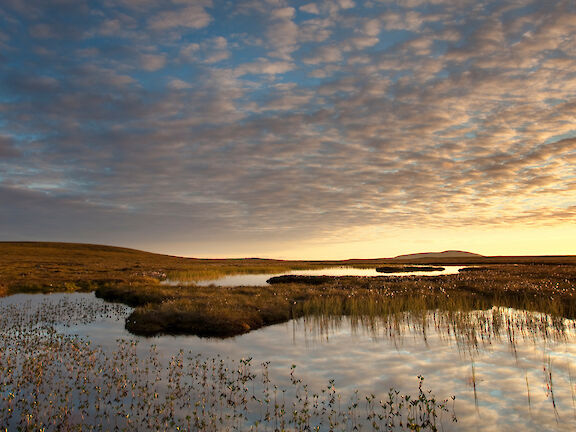
Peatlands shape large parts of the Scottish landscape and cover more than 20 percent of the country’s land area. They provide habitats for specialized plants such as sphagnum mosses, as well as animal species including the Eurasian curlew and European golden plover. At the same time, peat soils store carbon and influence the water balance of their surroundings.
Scotland’s peat soils are estimated to store around 1.6 billion tons of carbon. Intact peatlands can retain this carbon in the soil over the long term. Their ability to absorb water and release it gradually also means that they play an important role in the natural water cycle.

Our collaboration with the Scottish Wildlife Trust
According to estimates, more than 80 percent of Scotland’s peatlands are in a degraded condition. Drainage, agricultural use and development have altered many of these areas over time.
Since 2025, we have been supporting the Scottish Wildlife Trust in the restoration and protection of two peatland areas in Scotland.
Our partnership focuses on Cander Moss, around 30 minutes from Glasgow, and Bankhead Moss, around one hour from Edinburgh.

Challenges in Cander Moss and Bankhead Moss
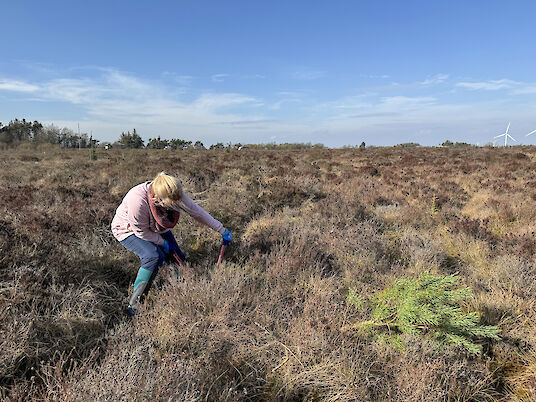
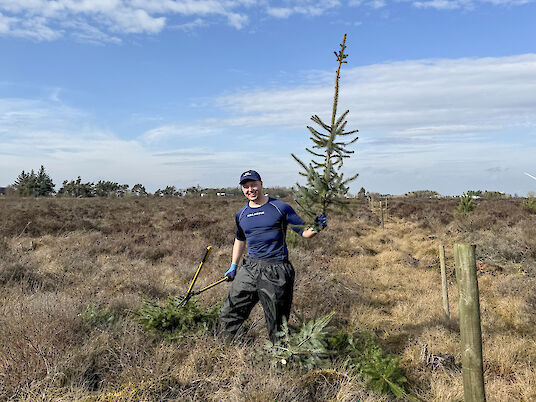
At Cander Moss, a lowland raised bog, birch trees are increasingly spreading across the area. Their growth affects the bog’s water balance and changes the conditions for its characteristic peatland vegetation.
At Bankhead Moss, trampling damage is causing changes to the specialized vegetation and compaction of the soil. This affects natural processes within the peatland, including peat formation and the ability of the peat soil to store water and carbon.
Lightnet UK in action at Cander Moss
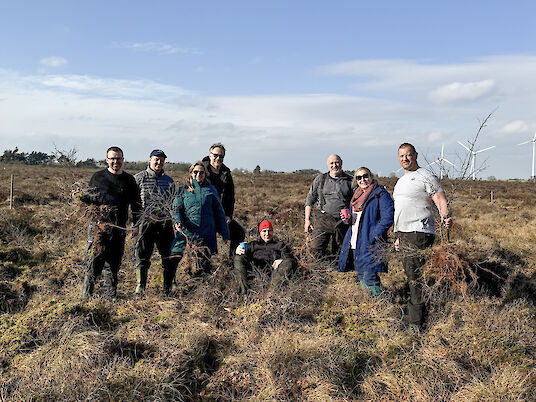
Our team from Lightnet UK pulled up their sleeves and headed to Cander Moss in March 2025. Together with Chris and Sarah from the Scottish Wildlife Trust, they worked hard to remove the overgrown birch trees.
A big thank you to them for their expert guidance and the fascinating insights into the importance of moorland landscapes. You can find out more about the work of the Scottish Wildlife Trust here.


Our partnership with One Earth One Ocean
A project that is close to our hearts: since 2024, Lightnet Germany has been supporting the One Earth One Ocean association and the ‘SeeKuh’ cleaning ship, which removes ghost nets from the Baltic Sea.